
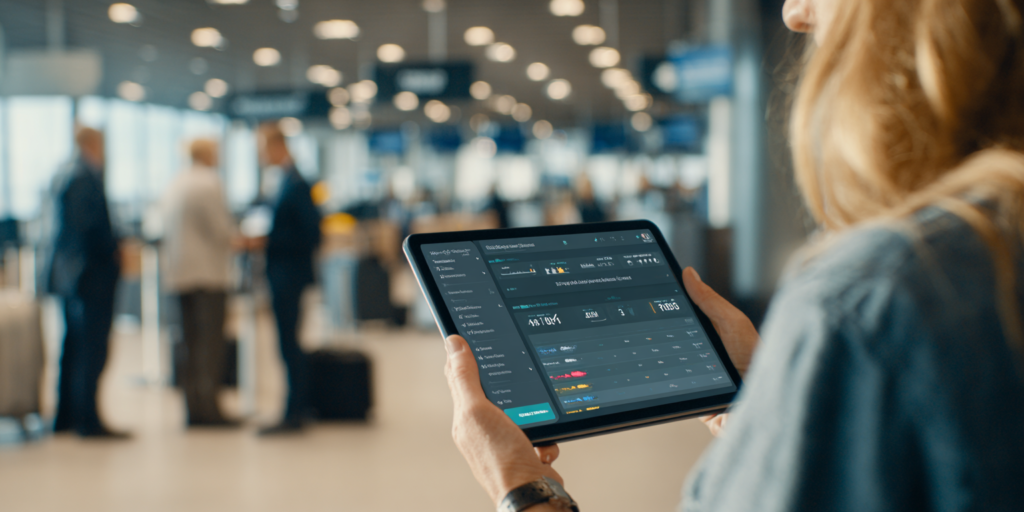
Airline assistance operations take place in one of the most demanding environments in the world: airports. High passenger volumes, strict schedules, multiple stakeholders, and zero margin for error define the daily reality of assistance teams. In this context, traditional manual processes are no longer sufficient. Real-time technology has become a critical enabler for operational efficiency, transparency, and service quality.
For years, many assistance providers relied on paper logs, radio communication, and spreadsheets to coordinate teams and report results. While functional in the past, these methods introduce delays, blind spots, and operational friction. Today’s airlines demand speed, accuracy, and real-time visibility—expectations that can only be met through digital platforms designed for live operations..
From manual coordination to real-time execution
Real-time technology fundamentally changes how airline assistance services are delivered. Instead of reacting after issues occur, supervisors can now monitor operations as they happen. Assignments are dispatched instantly, services are tracked from start to completion, and every action is recorded automatically.
With platforms like Sayroll, the moment a boarding pass is scanned, the service lifecycle begins. The system logs the assignment, tracks the runner’s location, measures response times, and confirms completion—all without manual input. This eliminates guesswork and ensures that no service goes untracked.

Operational visibility for supervisors and airlines
One of the biggest challenges in airline assistance is visibility. Supervisors need to know where their teams are, what services are active, and where bottlenecks may arise. Airlines, on the other hand, require transparency to ensure passengers are being assisted efficiently and according to service-level agreements.
Real-time dashboards solve this challenge by centralizing operational data. Supervisors gain a live overview of active services, runner availability, and performance metrics. Airlines can access dedicated views showing assisted passengers per flight, completion rates, and service timelines. This shared visibility builds trust and reduces the need for manual reporting
Data-driven decisions in high-pressure environments
Airport operations leave no room for delays in decision-making. Real-time data enables supervisors to act immediately—reassigning runners, adjusting coverage, or prioritizing urgent services. Over time, historical data and KPIs allow management teams to analyze trends, optimize staffing, and improve service quality.
By replacing static reports with live metrics, assistance companies gain the ability to continuously improve operations. Peak hours, recurring delays, and performance gaps become visible and actionable.
Meeting airline expectations in a digital-first era
Airlines increasingly expect their service partners to operate with the same level of digital maturity they do. Real-time tracking, auditable service records, and transparent reporting are no longer optional—they are requirements.
Platforms like Sayroll help assistance companies meet these expectations by providing a scalable, SaaS-based solution that adapts to real airport environments. The result is faster operations, better passenger experiences, and stronger relationships between assistance providers and airlines.
The future of airline assistance operations
Real-time technology is not just an improvement—it is a transformation. As airports grow busier and airlines demand higher standards, digital platforms will continue to define how assistance services are delivered.
Companies that adopt real-time operational tools today position themselves as reliable, modern partners for airlines tomorrow.